Portable Self-Storage vs. Traditional Storage: Which One’s Right for You?
Summary:
Traditional storage facilities offer fixed units that are often cheaper for long-term use but require you to handle transportation to and from the site. Portable storage provides the convenience of a container delivered to your location, making it ideal for short-term needs like moving or remodeling. While portable storage might have higher upfront costs, it saves you the hassle and cost of renting a truck and allows for a more flexible loading and unloading schedule.
When it’s time to clear out the garage, downsize your home, or free up some space, storage solutions quickly become top of mind. But with today’s expanding options, you’re no longer limited to the classic drive-up storage unit on the edge of town. Portable self-storage has become an increasingly popular alternative, and for good reason.
Advanced Steel, LLC doesn’t provide storage services—but as manufacturers of portable and long-term storage systems, we’re using our authority in this field to write this guide for you.
We’ll explore the key differences between portable self-storage and traditional storage units, helping you decide which makes the most sense for your needs. We'll break it down in simple terms from cost to convenience to security to flexibility.




What’s the Difference Between Portable and Traditional Storage?
Traditional storage typically refers to fixed storage units located at a facility. You rent a space—whether it’s climate-controlled or not—and haul your belongings there to store them. Access is usually limited to the facility’s hours, and you’ll need a vehicle to move things in and out. You’ve seen traditional storage—two of the most recognizable names in the business are U-Haul and Extra Space Storage.
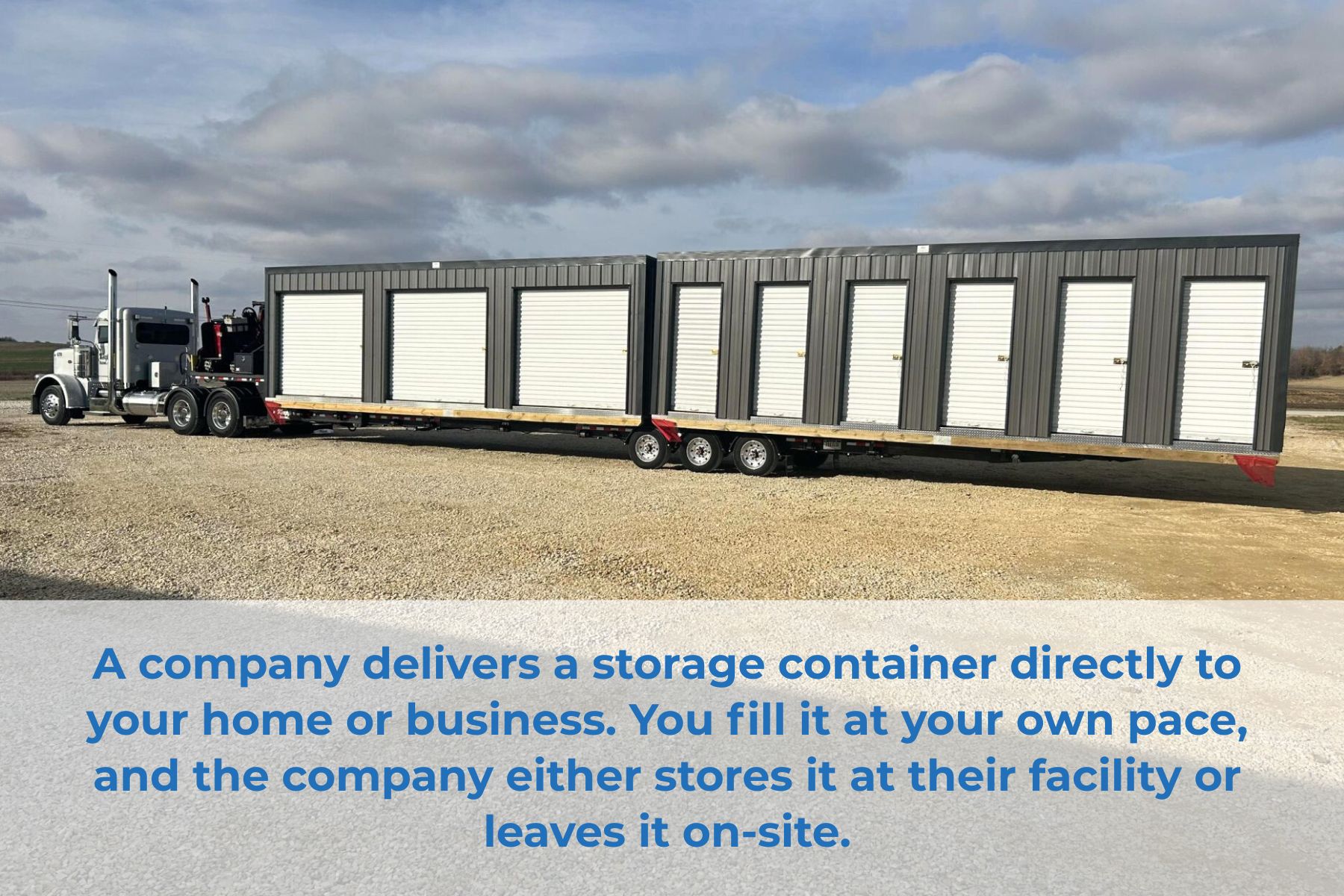
Portable self-storage, on the other hand, flips that model on its head. A company delivers a storage container directly to your home or business. You fill it at your own pace, and the company either stores it at their facility or leaves it on-site. If you move, they can deliver it to your new address. PODS is a well-known company in this field, while U-Haul is also making inroads into portable self-storage.
In short:
- Traditional storage: You go to the storage.
- Portable storage: The storage comes to you.
Cost Comparison: Which Option Is More Economical?
Price can vary based on location, unit size, and features such as climate control or 24/7 access, but here’s a general breakdown:
- Traditional storage units are often cheaper month-to-month, although your pricing may depend on the length of your lease. In addition to the lease, you’ll also incur extra costs, such as truck rentals, gas, and pizza for your moving buddies.
- Portable storage has higher upfront costs, including security, delivery, and pickup fees. Portable units may include built-in storage time with the rental, allowing you to load and unload your belongings at your own pace.
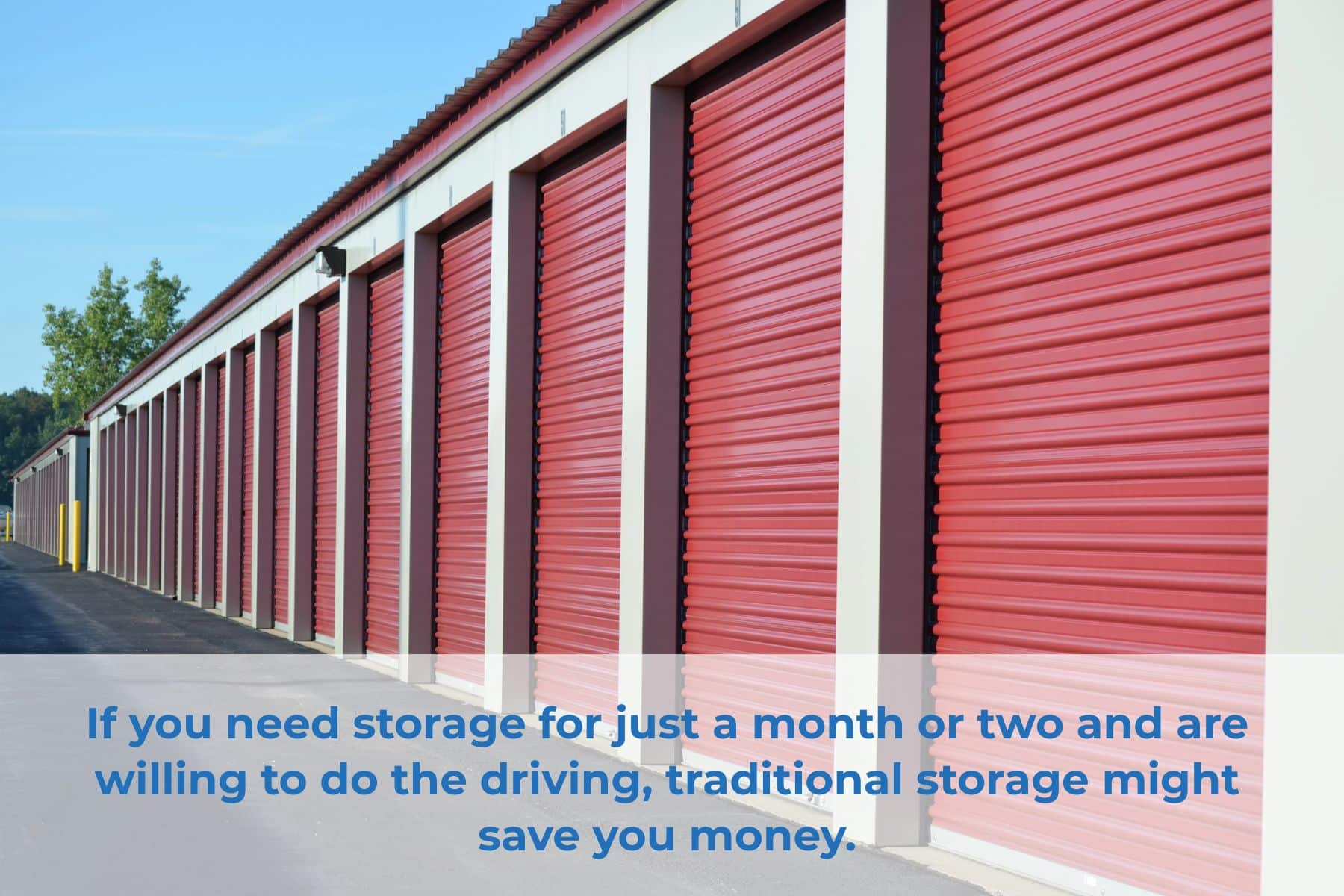
If you need storage for just a month or two and are willing to do the driving, traditional storage might save you money. But if you’re relocating, renovating, or need ultimate flexibility, the ease of portable storage often makes the extra expense worthwhile.
Convenience: Which One’s Easier to Use?
This is where portable storage shines.
Portable Self-Storage is delivered to your door—no truck rental to get it to you! With the storage unit at your doorstep, you no longer have to make back-and-forth trips to access the unit, and you can load and unload on your schedule. And because you can designate where the storage goes, the unit can stay on-site or be moved elsewhere.
Traditional Storage is based in a facility, so it’s great for long-term access if you’re nearby. You can find a storage space in almost every town or city, so you can likely find one within a convenient distance. But you’ll still need to coordinate with the facility’s hours and drive back and forth to the facility, so if you need to pull something out of storage but got stuck at the office, you’re out of luck.
In a busy season of life, portable storage offers unmatched convenience if you’re moving or remodeling. However, a nearby storage unit should suffice if you only need to store a few items in the long term.
Security Features: What Keeps Your Stuff Safe?
Security is a top concern, regardless of where you store your belongings.
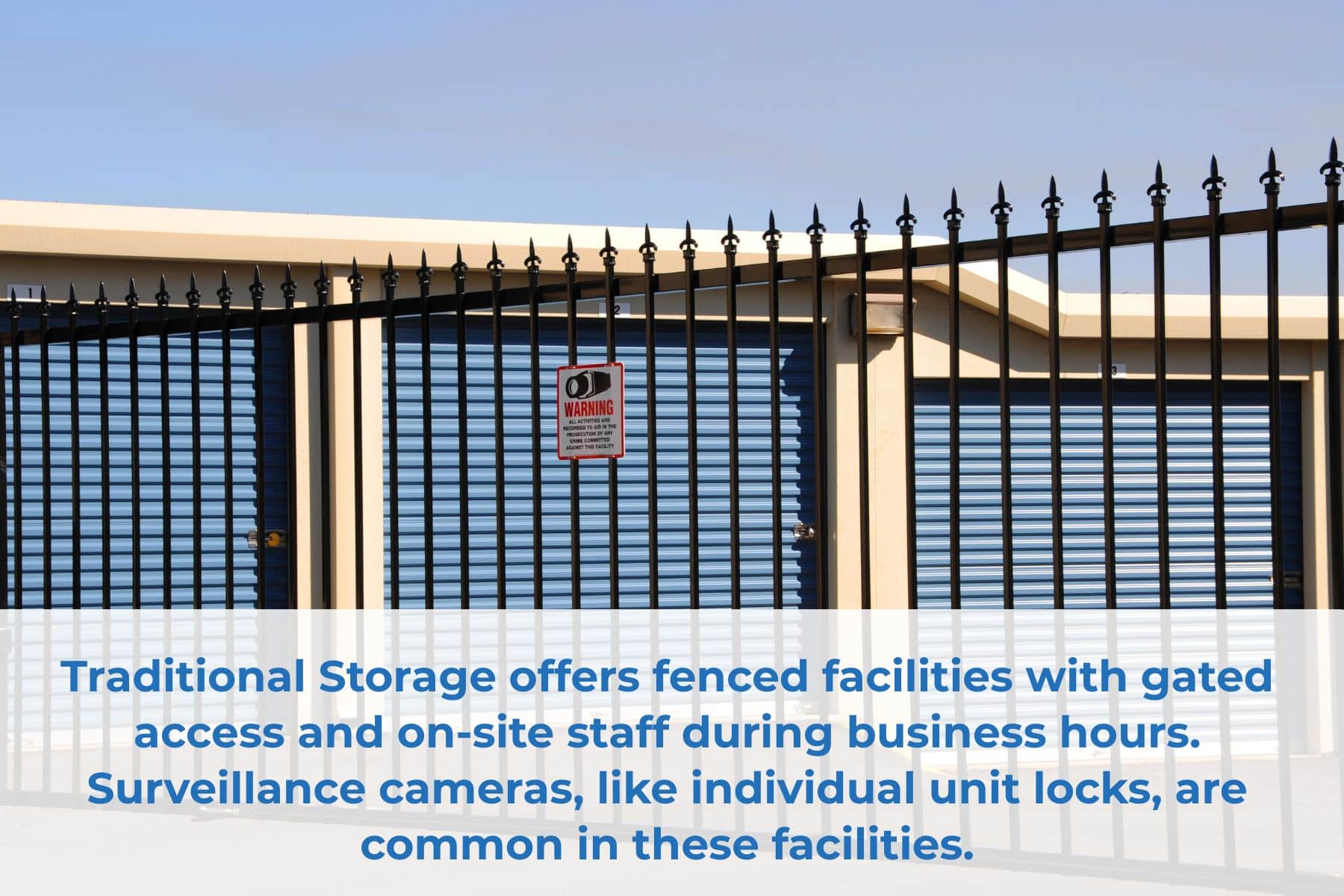
Traditional Storage offers fenced facilities with gated access and on-site staff during business hours. Surveillance cameras, like individual unit locks, are common in these facilities. Check the facility’s reputation before leasing. Storage units can be damaged during severe weather, especially outdoors. Inspecting the units to ensure they’re well-built and can withstand a beating during your facility tour is a good idea.
Portable Storage containers are typically heavy-duty, weather-resistant containers designed to withstand the rigors of being loaded and offloaded from a truck. Its rugged construction also gives portable storage units better durability against vandalism and break-ins; use a quality, heavy-duty padlock to secure your unit. Once it’s filled up, you can optionally transfer it to a secure facility for extra safekeeping.
Security is your responsibility if your portable unit is left on your property, so plan to park it in a well-lit, monitored area. Security is often comparable to traditional storage if stored at the provider’s facility. If you're storing the unit off-site, ask your provider about optional services such as GPS tracking, tamper-evident locks and seals, and facility security policies.
Who Uses Storage?
Your situation will likely determine which storage option fits best.
Portable Self-Storage Is Ideal For:
- Homeowners in transition (moving or remodeling) will benefit from having a place to store items in a room being renovated. Moving a room’s contents to a storage unit frees up space for you to work efficiently.
- Real estate staging, or preparing a house for sale, can be intimidating, especially when you need to clean and declutter quickly. Having a storage unit outside to stash that extra stuff is very handy.
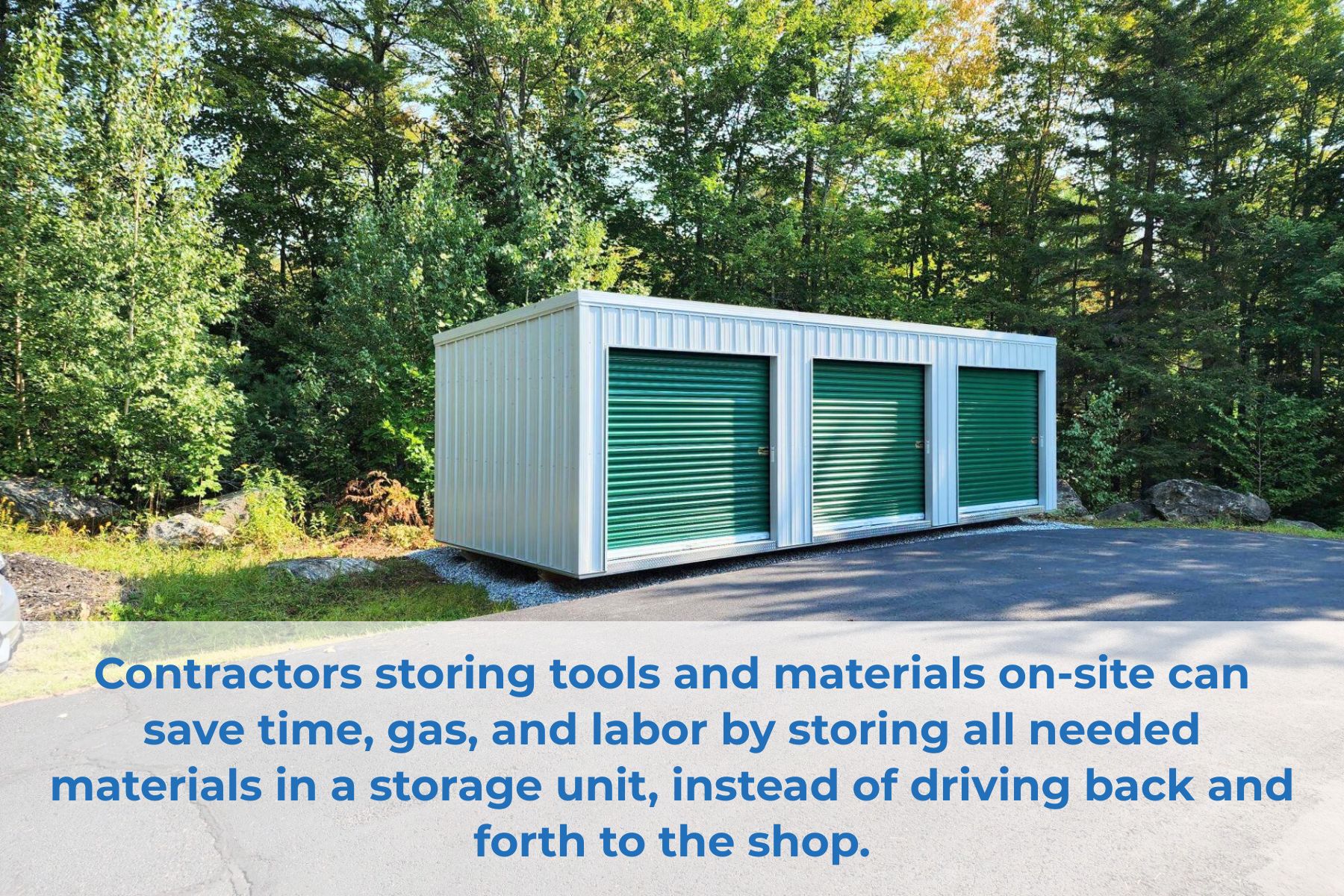
- Contractors storing tools and materials on-site can save time, gas, and labor by storing all needed materials in a storage unit, instead of driving back and forth to the shop.
- Dealing with pests or mold in the house? It’s certainly easier to move your belongings into a storage unit just outside the house, rather than to haul it all to a facility as your home is being fumigated or remediated.
Traditional Storage Works Best For:
- Long-term storage of rarely accessed items, such as seasonal decorations, inventory for a home-based business, or even a sports car, can be stored in a long-term storage facility.
- Are you a college student living in a dorm? Store your dorm contents in a storage unit between semesters!
- With any business, there’s a mountain of paperwork that needs to be archived. Taxes, legal documents, invoices, bills—if you need to store vast amounts of paper, a climate-controlled storage unit with good security might be a good option.
Which Option Is More Flexible?
Portable storage offers more flexibility in the short term, especially when timelines are unpredictable. You can keep the unit at your home as long as you need and relocate it when ready.
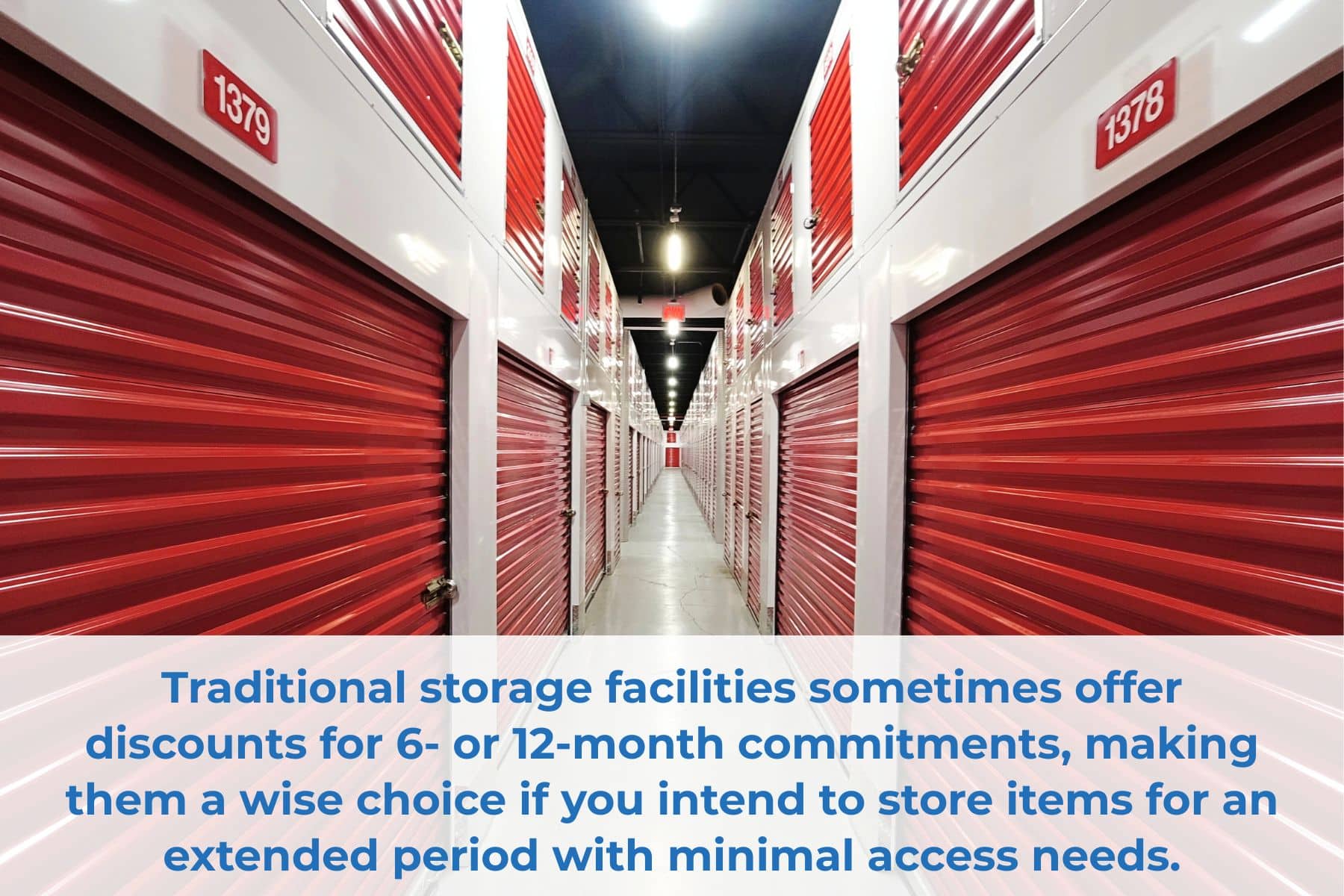
Traditional storage may offer better rates for long-term contracts. Facilities sometimes offer discounts for 6- or 12-month commitments, making them a wise choice if you intend to store items for an extended period with minimal access needs.
Real-Life Scenarios: Who Chooses What?
Sometimes it helps to see how people use these options. Here are four examples of how different needs call for different types of storage.
The Home Renovator (Portable Storage)
Karen and her husband in Des Moines were renovating their kitchen and living room. With contractors coming in and out, they needed to clear furniture, appliances, and personal items—but still wanted easy access to some of it.
Solution: A portable storage container delivered to their driveway allowed them to load quickly and retrieve things when needed. It was picked up after the remodel—no truck rental required.
The Mobile Contractor (Portable Storage)
Jason owns a small contracting business in Indiana, which requires him to move from town to town every few weeks. He needed a secure, portable job site to move as projects shifted.
Solution: A custom rugged, relocatable storage container that’s lockable, weather-resistant, and ideal for transporting between jobs. It saved time and protected valuable equipment.
The College Student (Traditional Storage)
Emily, a student at the University of Nebraska, needed a place to store dorm room items over summer break while she went home.
Solution: She used a traditional self-storage unit close to campus. Affordable and accessible, it was a low-maintenance option for a few months of hands-off storage.
The Downsizing Retiree (Traditional Storage)
Susan and her husband were moving from their family home into a smaller condo. They weren’t ready to part with heirlooms, furniture, and holiday decorations.
Solution: A climate-controlled traditional unit gave them peace of mind while they took their time deciding what to keep, give away, or pass on.
Conclusion
Ultimately, your choice depends on what you’re storing, how long you need to store it, and how much convenience matters to you. With this blog, you should be able to make an informed decision using the information available.
At Advanced Steel LLC, building storage solutions is our specialty. Whether for on-site or portable storage, self-storage building conversions, or need a custom long-term structure for agricultural or commercial use, Advanced Steel builds storage units and structures that are:
- Built with durable, light-gauge galvanized steel
- Custom-designed to fit your exact space and needs
- Naturally resistant to fire, pests, and rot
- Made to handle the elements with minimal maintenance
- Engineered for quicker installation and stronger structural integrity
If you're ready to invest in storage that lasts—whether portable or permanent—Advanced Steel LLC is here to help you make a wise choice.
Contact us today to learn more about our custom-built storage solutions!
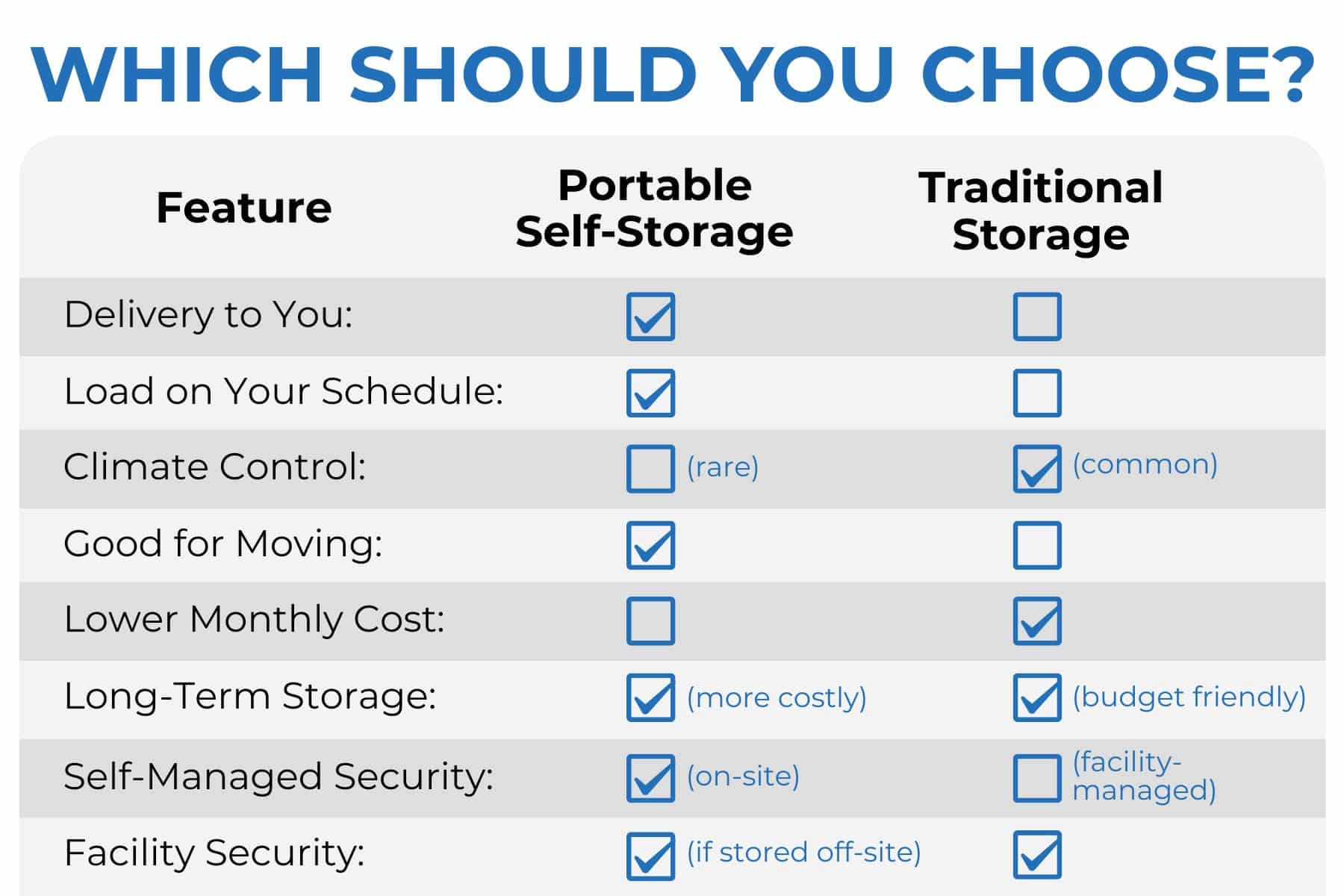
Which Should You Choose?
Here’s a quick comparison chart of the two storage options: